In the high-stakes arena of American higher education, the term “burnout” has transitioned from a mere buzzword to a clinical reality for millions. As the US academic landscape grows increasingly competitive, students are no longer just fighting for grades; they are fighting for their mental equilibrium. In 2026, the pressure to perform has reached an all-time high, with academic standards evolving to demand more than just rote memorization.
Academic burnout is not simply “feeling tired” from a late-night study session. It is a state of chronic physical and emotional exhaustion that results from prolonged stress. According to researchers at the University of California, Berkeley, burnout occurs when the demands placed on a student exceed their internal resources over an extended period. This isn’t just about laziness; it’s about a total depletion of the cognitive and emotional “fuel” required to function.
The Biological Blueprint of Exhaustion
Stress triggers a biological response: the overproduction of cortisol. While a small amount of cortisol helps us meet deadlines, chronic elevation leads to cognitive impairment, memory lapses, and a weakened immune system. For many students in the USA, the pressure to maintain a high GPA while juggling internships and part-time work creates a “perfect storm” for collapse.
When you feel the walls closing in, it is vital to remember that seeking professional assistance is a sign of high-level management skills, not weakness. Often, the most effective way to regain control is leveraging professional academic consultants to manage workload and ensure you can write my paper for me in the USA with the precision required for modern standards. By delegating complex writing tasks to seasoned professionals, students can provide their brains with the “off-ramp” necessary to prevent permanent cognitive fatigue and restore their creative energy.
Why Information Overload is Killing Creativity
The 2026 academic standards in the USA have shifted heavily toward “Information Gain”—the requirement for students to provide unique insights that go beyond what an AI can generate. This has led to a massive increase in the word-count and research depth required for standard assignments. Students are now expected to be subject matter experts, data analysts, and eloquent writers all at once.
In this environment, a support system isn’t just a group of friends; it’s a toolkit of academic resources. To navigate these rising expectations, many students find that reviewing pre-vetted essays for sale online provides them with a structural blueprint that would otherwise take days to research from scratch. Having access to high-quality templates allows students to understand the “expectation gap” and fill it without sacrificing their health. This strategic use of external expertise acts as a buffer against the crushing weight of modern academic expectations.
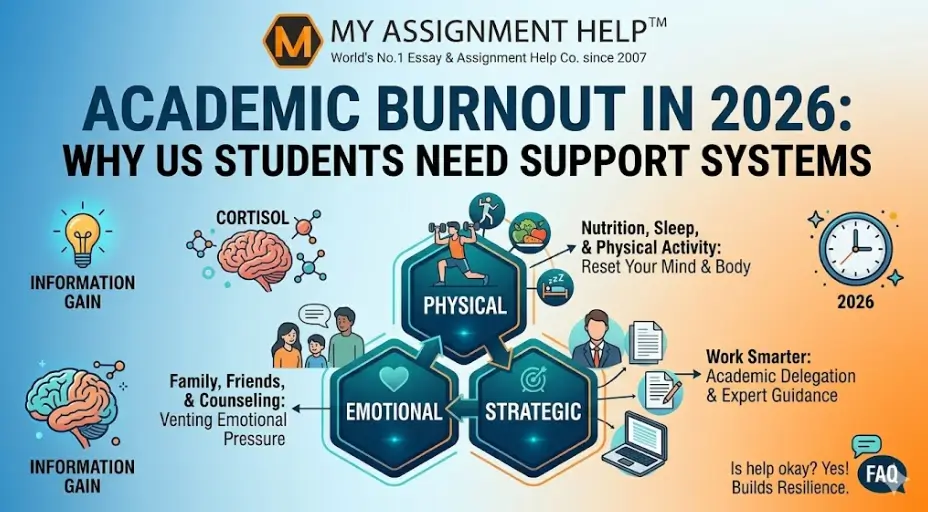
The Three Pillars of a Resilient Support System
To survive the rigorous demands of the US university system, a student’s support network must be multidimensional. It is rarely enough to just “work harder.” Instead, one must work smarter by building these three pillars:
1. The Emotional Pillar
This includes family, friends, and campus counseling services. Having a space to voice frustrations without judgment is essential for venting emotional pressure before it turns into cynicism.
2. The Physical Pillar
Proper nutrition, sleep hygiene, and physical activity are non-negotiable. Studies from the American Psychological Association (APA) show that even 20 minutes of movement can lower cortisol levels significantly.
3. The Strategic Pillar
This involves academic delegation and the use of professional tools. Knowing when a task is too large for one person and utilizing professional writing services or tutoring centers ensures that quality remains high while stress remains low.
Key Takeaways for US Students
- Identify Early: Recognize “Stage 2” stress (irritability and fatigue) before it becomes “Stage 4” total burnout.
- Strategic Delegation: Utilize academic consultants for high-stakes papers to save cognitive energy for core subjects.
- Resource Utilization: Leverage essay databases as a starting point to speed up the research process.
- Set Boundaries: Establish hard “no-work” zones in your schedule to allow for neural recovery.
See also: Why DDR4 Memory Modules Still Matter in Modern Systems
Frequently Asked Questions (FAQ)
Q: Is using an academic service considered a support system?
A: Absolutely. Just as a business executive uses a consultant, a student uses academic experts to manage high-volume workloads and maintain professional standards.
Q: How can I afford a support system on a student budget?
A: Many services offer affordable options, such as purchasing pre-written essays for reference. This is often more cost-effective than the financial and emotional cost of repeating a failed course due to burnout.
Q: Does burnout affect my future career?
A: If left unaddressed, yes. Chronic burnout can lead to a lack of interest in your field. Addressing it now through a support system builds the resilience you’ll need in the professional world.
Author Bio
Dr. Marcus Thorne
Senior Content Strategist at MyAssignmentHelp
Dr. Thorne has over 15 years of experience in educational psychology and curriculum design across the United States. He focuses on developing strategies that help students achieve academic excellence without compromising their mental health or well-being.
References & Data Sources
- American Psychological Association (2026). “The State of Mental Health in US Colleges: A 2026 Perspective.”
- Harvard Health Publishing (2026). “Understanding the Stress Response: How Cortisol Affects Learning and Memory.”
- US Department of Education (2026). “Student Retention and the Role of Academic Support Strategies in 2026.”